
Loading...
Serving Lakeland, FL and surrounding areas. (863) 500-8083
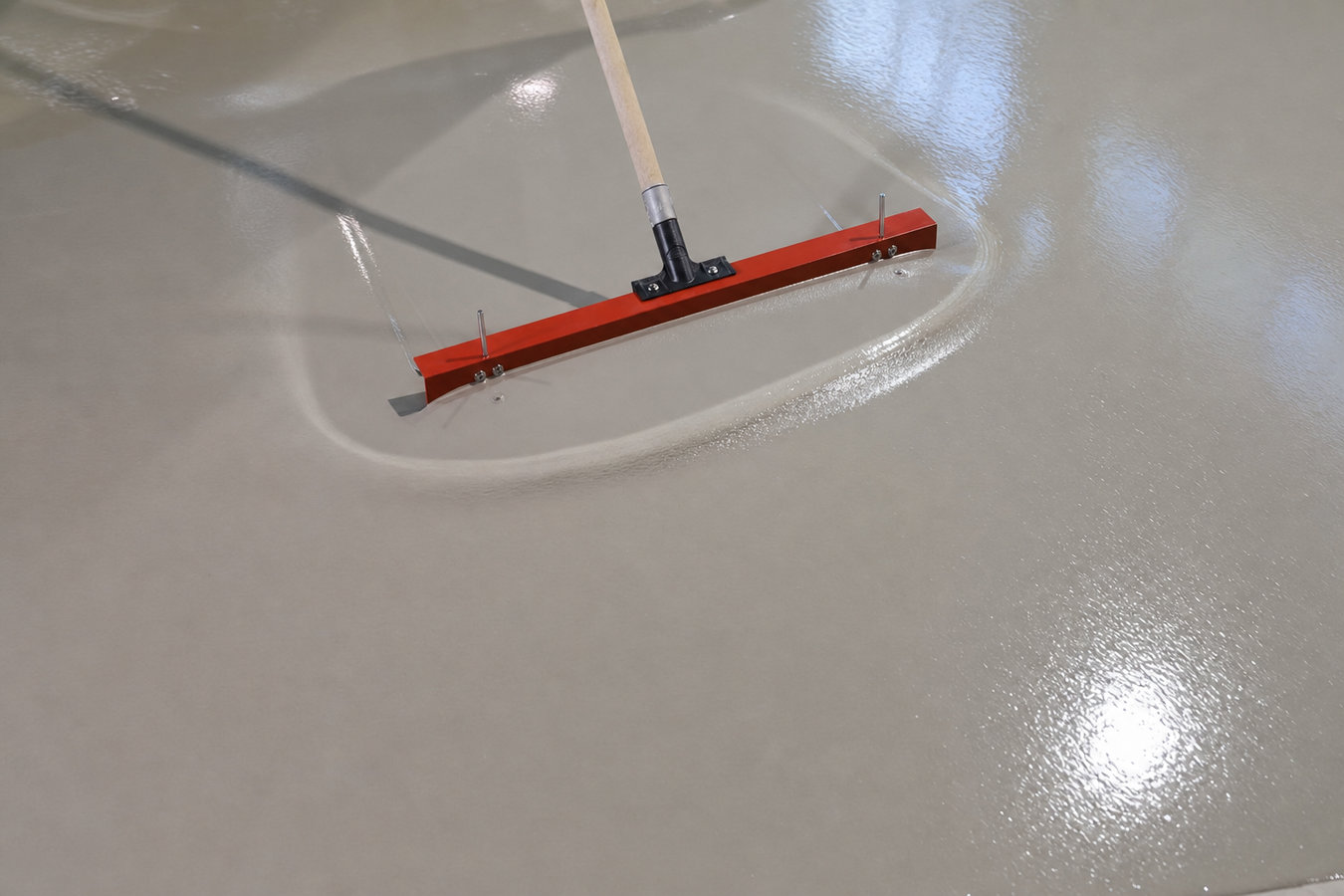
Uneven floors, hollow-sounding coatings, and sloped slabs are fixed before your new tile or finish goes down. We level the surface properly so what comes next actually lasts.
Self-leveling concrete in Lakeland is a pourable compound that flows and spreads across your existing floor to fill low spots and create a flat, even surface - most jobs on a single room or garage take one to two days from prep through initial drying.
If your floors have developed a noticeable slope, your tile keeps cracking in the same spots, or a flooring installer has told you the slab needs leveling before new material can go down - this is the service that fixes that. Self-leveling concrete flows on its own to find a flat surface, the way water does, and cures into a solid base ready for tile, vinyl plank, hardwood, or a decorative overlay. In Lakeland, where homes built in the 1960s through 1980s have had decades to settle and shift on sandy Polk County soil, uneven slabs are common and very fixable without tearing the floor out.
For exterior surfaces like a lanai or pool deck that need a decorative finish on top of a leveled base, we often combine this work with our concrete resurfacing and overlay service to complete both steps in a coordinated project.
If a ball rolls on its own across your floor, or furniture wobbles on what should be a flat surface, your slab has developed low spots. This is common in Lakeland homes built before 1990, where decades of soil movement under sandy Polk County ground have caused gradual settling. Self-leveling concrete fills those low areas and gives you a flat base again - no demolition required.
When tile cracks in the same spots even after being replaced, the floor underneath is usually not flat or stable. The tile is not the problem - the uneven surface it is sitting on is. In Lakeland's older neighborhoods, this pattern often points to a slab that has shifted slightly over the years and needs leveling before any new flooring goes down.
Walk your garage floor or lanai and tap on it - a hollow sound in patches means the existing coating has lost its bond to the slab. This is especially common in Lakeland because moisture rising through the slab from Florida's high water table pushes coatings off from underneath. A fresh overlay with proper moisture preparation fixes the problem at the source.
Vinyl plank, hardwood, and large-format tile all require a very flat surface to install correctly. If your flooring installer has flagged this before installation, it is a real technical requirement - not a sales add-on. A self-leveling pour before installation prevents cracked tile, squeaky planks, and the premature wear that shows up within a year on an uneven base.
Before any material goes down, we assess your slab carefully. We check for cracks, test for moisture - a required step in Lakeland's humid climate where moisture rising through slabs is a common cause of overlay failure - and determine whether the existing surface needs repair before leveling or an overlay can be applied. The floor is then ground or cleaned mechanically to give the new material a surface to bond to. Skipping this step is the most common reason self-leveling jobs fail, and we do not skip it.
Once the slab is prepared, we pour the self-leveling compound and let it spread and settle on its own. For decorative overlay projects, color, texture, or a polished finish is applied after the base layer cures. Outdoor surfaces like pool decks and lanais get UV-resistant sealers that hold up under Florida's direct sun. If your project involves a full outdoor surface refresh - leveling plus a decorative finish - combining this service with our pool deck coatings and resurfacing work gives you a complete, coordinated result. For projects where the existing coating has failed entirely, our concrete resurfacing and overlay service addresses the full surface in a single scope of work.
Suits interior slabs that need a flat, smooth base before new tile, vinyl plank, or hardwood flooring is installed over them.
Suits garage floors that are flat but worn or stained and benefit from a colored, textured, or polished overlay surface for a finished look.
Suits screened lanais and covered outdoor living areas that need a refreshed surface with UV-resistant sealing designed for Florida's year-round outdoor conditions.
Suits Lakeland slabs where moisture is rising from below and the floor needs a barrier coat installed before any overlay material will bond reliably.
Lakeland sits in one of the most humid parts of Florida, and that moisture does not just stay in the air - it moves up through concrete slabs from the ground below. A large share of homes in established Lakeland neighborhoods were built in the 1960s through 1980s on sandy Polk County soil that shifts and settles over time. Those two factors - moisture from below and soil movement over decades - are the main reasons floors in this area develop low spots, cause tile to crack repeatedly, and make coatings bubble or peel. Any contractor working on your floor in Lakeland needs to account for both before recommending a solution. We test every slab for moisture before we pour anything, and we look at the slab's stability before we recommend an overlay. Homeowners in Haines City deal with the same soil and moisture conditions as Lakeland, and our approach is the same across all of Polk County.
Screened lanais and pool decks are a dominant part of outdoor life in Lakeland - Florida's climate means these spaces get year-round use, and the sun and rain hit them hard. Decorative overlays on lanai floors and pool decks are one of the most popular upgrades we handle in this market. For those outdoor applications, UV-resistant sealers are not optional - Florida's direct sun degrades unprotected surfaces faster than most homeowners expect. If you are considering an overlay on your lanai or pool deck, late fall through early spring is the most reliable window to schedule the work in this area. Customers in Davenport and the surrounding communities face the same scheduling and material considerations, and we plan every project accordingly.
We ask a few basic questions - the size of the area, what the floor looks like now, and what you are planning to put on top of it. Most customers hear back within one business day, and we will schedule an on-site visit rather than quoting over the phone.
During the visit we look at the floor's condition, check for cracks or damage, and test for moisture coming up through the slab. In Lakeland, this moisture check directly affects which products we use and whether a barrier coat is needed. You get a written quote that breaks down prep, materials, and labor before we leave.
On the work day, the crew grinds or cleans the surface, addresses any cracks or moisture issues, and pours the self-leveling compound. The pour itself goes quickly - most of the on-site time is prep work. In Lakeland's humidity, we follow product-specific curing guidance rather than going by the clock.
Once the surface has cured - typically 24 to 72 hours - we inspect it and apply a sealer if that is part of your project. We walk the finished surface with you, confirm it is flat and well-bonded, and give you clear instructions on when the space can be fully used again and how to maintain it going forward.
Free estimate, written quote, no obligation. We respond within one business day.
(863) 500-8083Moisture rising through Lakeland slabs is the most common reason overlays fail in this area. We test every slab before anything goes down - not as an upsell, but because skipping it in Florida's climate produces a surface that bubbles or peels within months. If moisture is present, we address it properly before the overlay is applied. The American Concrete Institute treats moisture testing as a required step for overlay work - and so do we.
Sandy Polk County soil shifts under slabs over time, especially after heavy rains or dry spells. We assess whether the movement has stopped before recommending an overlay, because applying one over an actively shifting slab is money wasted. Understanding local soil behavior is part of every estimate we give in this area.
Not all overlay materials and sealers hold up in Florida's direct sun. We use products specifically rated for UV exposure on outdoor surfaces like lanais and pool decks - because a sealer that is not formulated for Florida conditions will yellow, chalk, or degrade faster than you would expect and leave the surface underneath unprotected.
We assess your slab thoroughly before giving you a number, so the written estimate you receive reflects the actual job - including prep, moisture work if needed, materials, and labor. What the estimate says is what the invoice says. No categories that expand quietly once the job is underway.
Lakeland homeowners who have had overlay work done poorly before know what cutting corners looks like - bubbling, hollow spots, and a contractor who is hard to reach afterward. These are the things we are specifically built to avoid, on every job, in every neighborhood we serve.
Restore worn, hot, or rough pool decks with slip-resistant coatings and overlays built for Florida's year-round sun and bare-foot traffic.
Learn MoreCover cracked, stained, or pitted driveways, patios, and outdoor surfaces with a fresh bonded overlay - no full slab removal required.
Learn MoreFall and winter give you the most reliable curing conditions in Central Florida - and project slots go fast. Call now or request an estimate and we will follow up within one business day.