
Loading...
Serving Lakeland, FL and surrounding areas. (863) 500-8083
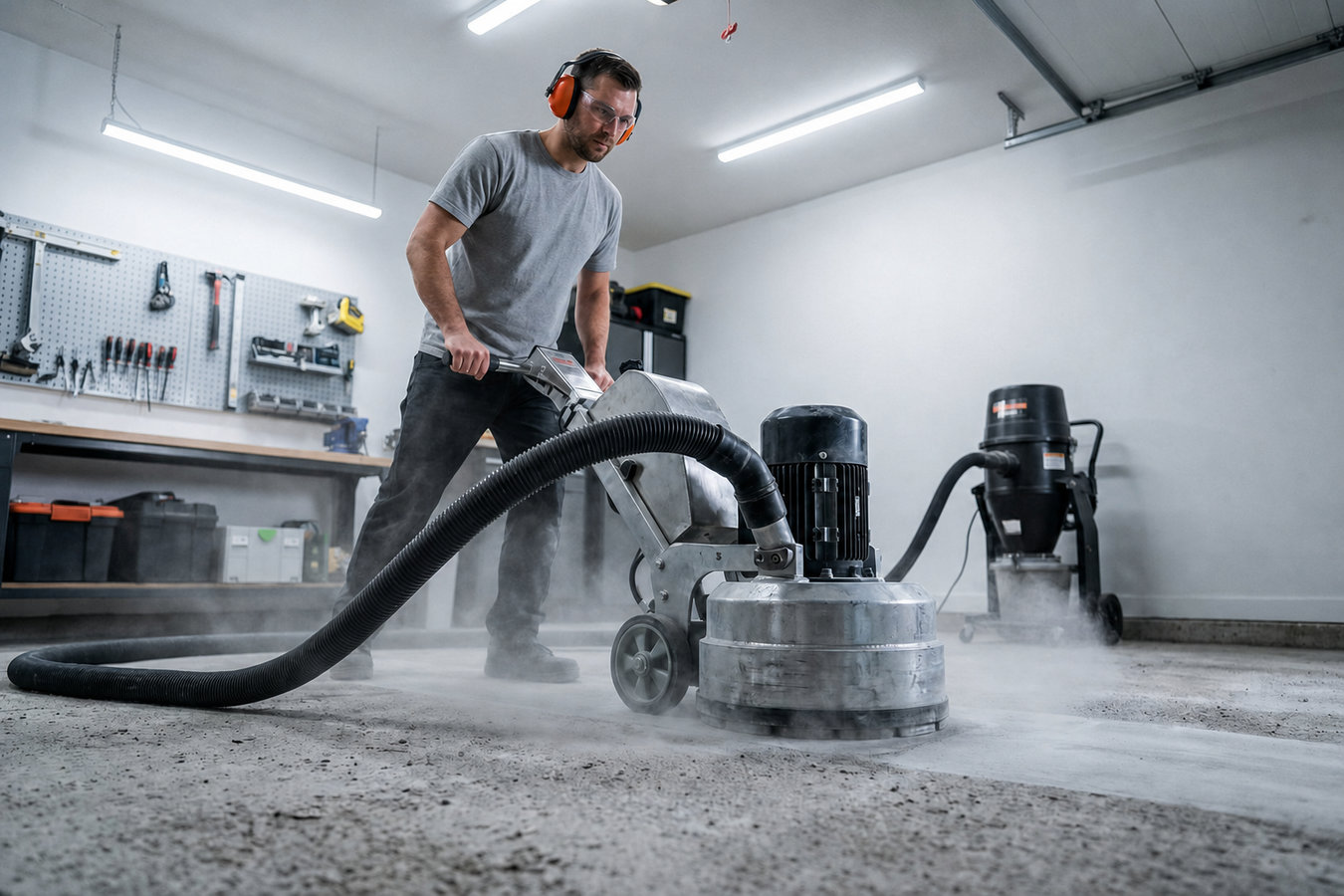
Peeling coatings and uneven slabs are fixed before they get worse. We grind your floor down to solid concrete so whatever goes on top actually stays there.
Concrete grinding in Lakeland uses heavy diamond-tipped machines to strip old coatings, flatten uneven spots, and open the surface so new materials bond properly - most jobs take one to two days for a standard garage or basement.
If you have a coating that is peeling, a floor that feels uneven, or you are getting ready to apply epoxy or tile, proper surface preparation is the step that determines whether your new floor lasts five years or five months. Many Lakeland homeowners skip it and end up calling a contractor back within a year. We start with a thorough assessment, test for moisture - a real concern given Polk County's high water table - and grind the floor until it is genuinely ready for what comes next.
If your existing coating has completely failed, you may also want to look at our concrete floor stripping and removal service before grinding begins.
If sections of paint or epoxy are lifting away in sheets or bubbles, the original surface was not properly prepared - or moisture is pushing up from below. In Lakeland, the second cause is extremely common due to the area's high water table. Patching over peeling coating never works for long - the floor needs to be ground to bare concrete.
Walk slowly across your concrete floor. If your foot rocks slightly in spots or you can see shadow lines where one section is higher than another, you have an uneven slab. Uneven concrete is a tripping hazard, and tile or coatings applied on top will crack or separate faster. Grinding levels those spots without replacing the entire slab.
Epoxy requires an open, clean surface to bond properly. Applying it over a smooth, sealed, or painted floor almost always leads to failure within months. If a flooring installer has told you the concrete needs prep work first, this is exactly what they mean. Skipping this step is the most common reason new coatings fail early.
Lakeland gets afternoon thunderstorms almost daily from June through September. A smooth or worn concrete surface becomes dangerously slick when wet. Grinding creates a slightly textured surface that gives your feet something to grip. This is especially worth addressing if children or older family members use the space regularly.
Every project starts with a walk of your floor. We look for old coatings, cracks, uneven spots, and signs of moisture before we give you a price. In Lakeland's humid climate, we always test for moisture coming up through the slab - because a coating applied over a damp surface will fail no matter how well it is ground. Once the assessment is done, we bring in diamond grinding equipment and work across the floor in overlapping passes until the surface is evenly open and ready.
After grinding, we clean thoroughly, inspect for cracks or low spots that need filling, and do a final moisture reading before we recommend moving forward. If you are planning to seal the floor after grinding, we can walk you through our concrete sealing options so the two steps are coordinated properly. For floors with heavy old coatings or thick paint buildup, we also handle concrete floor stripping and removal before the grinding phase begins.
Suits garages, basements, workshops, and interior slabs that need old coatings removed or leveling before a new finish is applied.
Suits driveways, pool decks, and patios that have become slippery, stained, or have failing coatings that need to be stripped before resealing.
Suits Lakeland slabs where moisture is pushing up from below and the floor needs to be opened, tested, and treated before any coating can be applied.
Suits floors with visible cracks, divots, or chipped areas that need filling and leveling before grinding is complete and a new finish goes down.
Polk County averages over 50 inches of rain per year, and Lakeland's summer humidity regularly sits above 80 percent. That moisture works its way up through concrete slabs from the sandy, water-retentive soil below - especially in homes built on Lakeland's former grove and fill land. A contractor who skips a moisture test before applying any coating is setting you up for a floor that peels within a year. Proper grinding opens the slab, lets it breathe, and gives you a clear picture of what is actually going on before money is spent on a finish. Homeowners in Winter Haven deal with the same soil and moisture conditions, and the same careful approach applies.
Many established Lakeland neighborhoods have homes built between the 1950s and 1980s, and their floors often carry layers of old paint, adhesive, and sealer that have built up over decades. Removing those layers takes more time and more machine passes than a newer floor - which affects both cost and schedule. We assess this during the estimate, not after work has started. Customers from Bartow to North Lakeland have the same mix of older homes and newer builds, and our estimates reflect what the actual floor requires rather than a flat rate that surprises you later.
We will ask a few basic questions about your space and what you want to do with the floor afterward. Most customers hear back within one business day and we schedule a site visit from there.
We walk the floor, check for old coatings, cracks, and moisture, and give you a written estimate that holds. In Lakeland, we always check for moisture before quoting - it affects both the approach and the price.
The crew arrives with grinding equipment and dust-collection systems attached directly to the machines. Clear the floor of vehicles, shelving, and stored items beforehand. For a standard garage, the grinding phase typically takes four to eight hours.
After grinding, we clean the surface, fill any cracks, and take a final moisture reading. We walk the floor with you and explain what was found. In Lakeland's humidity, plan on 24 to 48 hours before the space is back in full use.
Free estimate, no obligation. We will walk your floor, check for moisture, and give you a written quote that holds.
(863) 500-8083Given Polk County's high water table and sandy soil, we test for moisture before every coating application - not just on jobs where we suspect a problem. That one step is what separates a floor that holds for years from one that peels after the first rainy season.
Many homes in Lakeland and Polk County are built on post-tension slabs, where steel cables run through the concrete. We know how to identify these foundations and adjust our grinding approach to avoid damaging them. A contractor who does not ask about your foundation type before starting is a genuine risk.
We do a thorough walk of your floor before we ever give you a number - checking for old coatings, moisture, and any repairs the slab needs. What this means for you is a price that holds and a timeline you can plan around, not a surprise conversation when the crew arrives.
Concrete dust contains fine silica particles that require proper containment - OSHA's silica standard sets clear requirements for how it must be handled on the job. We run vacuum systems attached directly to our grinding machines throughout the job and clean thoroughly before we leave, so your home does not look like a construction site afterward.
Every one of these practices comes from years of working on Lakeland floors - from older concrete block homes in established neighborhoods to newer slabs in North Lakeland subdivisions. We know what this area's climate and soil do to concrete, and we prepare accordingly.
After grinding opens the surface, sealing locks in that protection so moisture, stains, and UV exposure cannot get back in.
Learn MoreFor floors with heavy old coatings or multiple failed layers, stripping first makes the grinding phase faster and more thorough.
Learn MoreFall and winter are the best seasons for concrete work in Lakeland - lower humidity means faster drying and better results. Lock in your project now before the schedule fills.